← projects Case 01

Isle of Summer '26.

Sunrise Stage — volumetric stage & generative system
Festival Stage 2026
Stage concept, a volumetric LED matrix and the generative engine behind it — designed and operated by ØJE Studio for Isle of Summer Vienna's premiere on Donauinsel. 821 LED panels, one engine, four surfaces.
Stage designVolumetricGenerativeReal-timeShow control
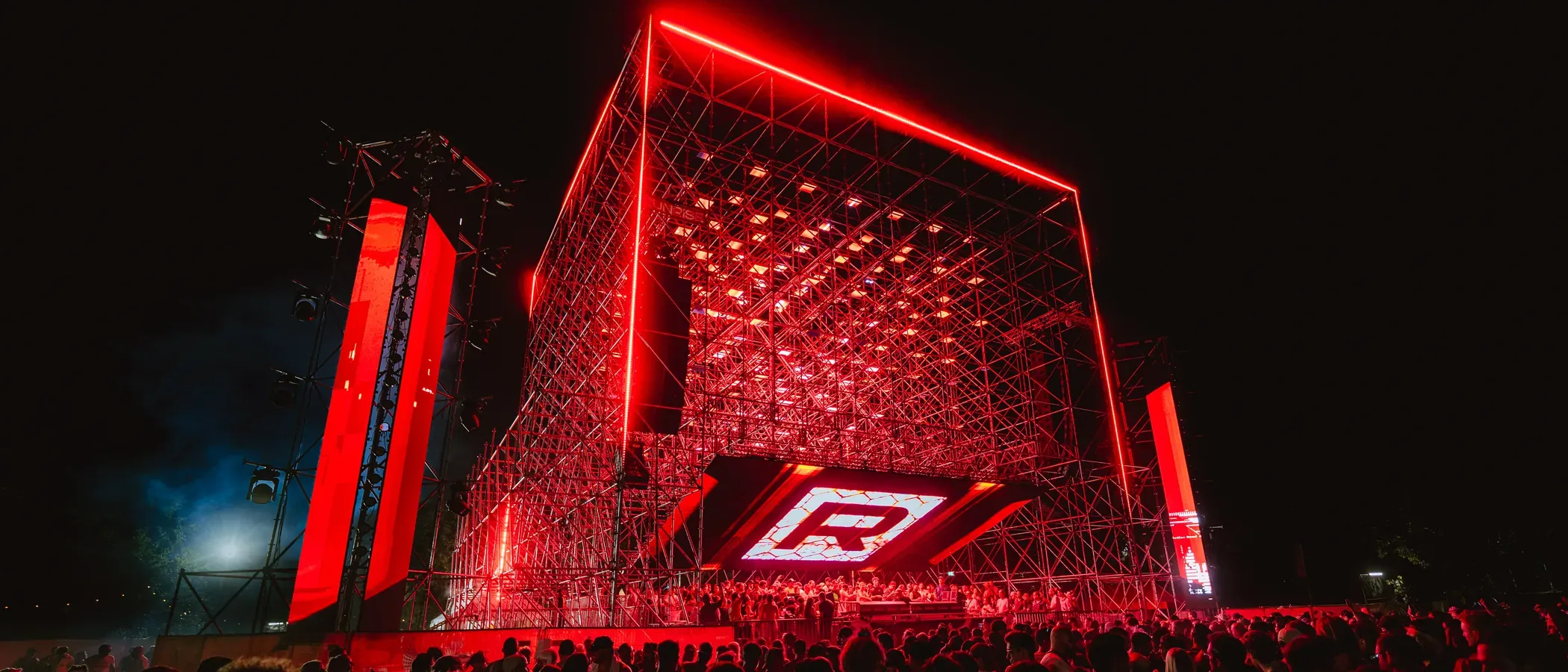
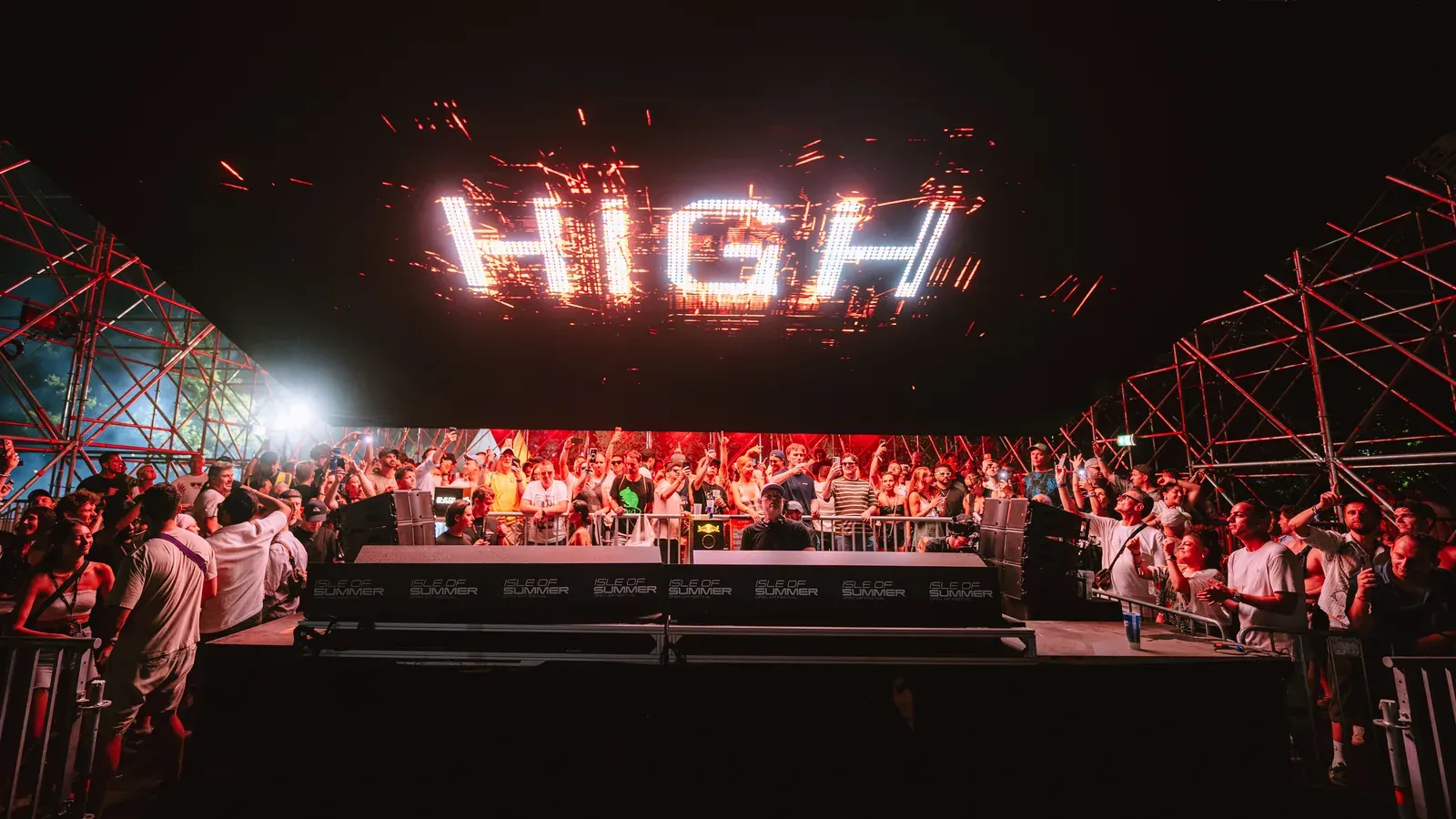
Isle of Summer Vienna 2026, Sunrise Stage on Donauinsel: 32 × 20 × 20 m lattice stage with the volumetric LED matrix lit at night, designed and operated by ØJE Studio
© Fabian May
Overview
Year
2026
1 August 2026
Client
Permanent Entertainment
Location
Donauinsel, Vienna
The festival's first Austrian edition
Scale
30,000 tickets sold
Doors at 11:00
Stage structure
32 × 20 × 20 m
Timeframe
May → 1 August
System
821 LED panels
matrix (7 × 7 × 5, 245 cells), main screen and towers
Studio
ØJE — Vienna
48.21°N, 16.37°E
Role
Stage concept & design, volumetric LED system, generative engine (MØRPH), content and show operation — ØJE Studio.
Challenge
Three demands that pull in different directions.
Enough enclosed backstage volume to run a festival stage. A structure open enough not to fight the volumetric LED system suspended in its upper section. And a monumental presence for the daytime hours — the festival runs from 11:00, so the stage spends half its life in full daylight, unlit.
A fourth demand sat underneath: one system had to drive every surface on the stage — and host the visual setups of touring headliners on top.
Solution
The structure is the screen.
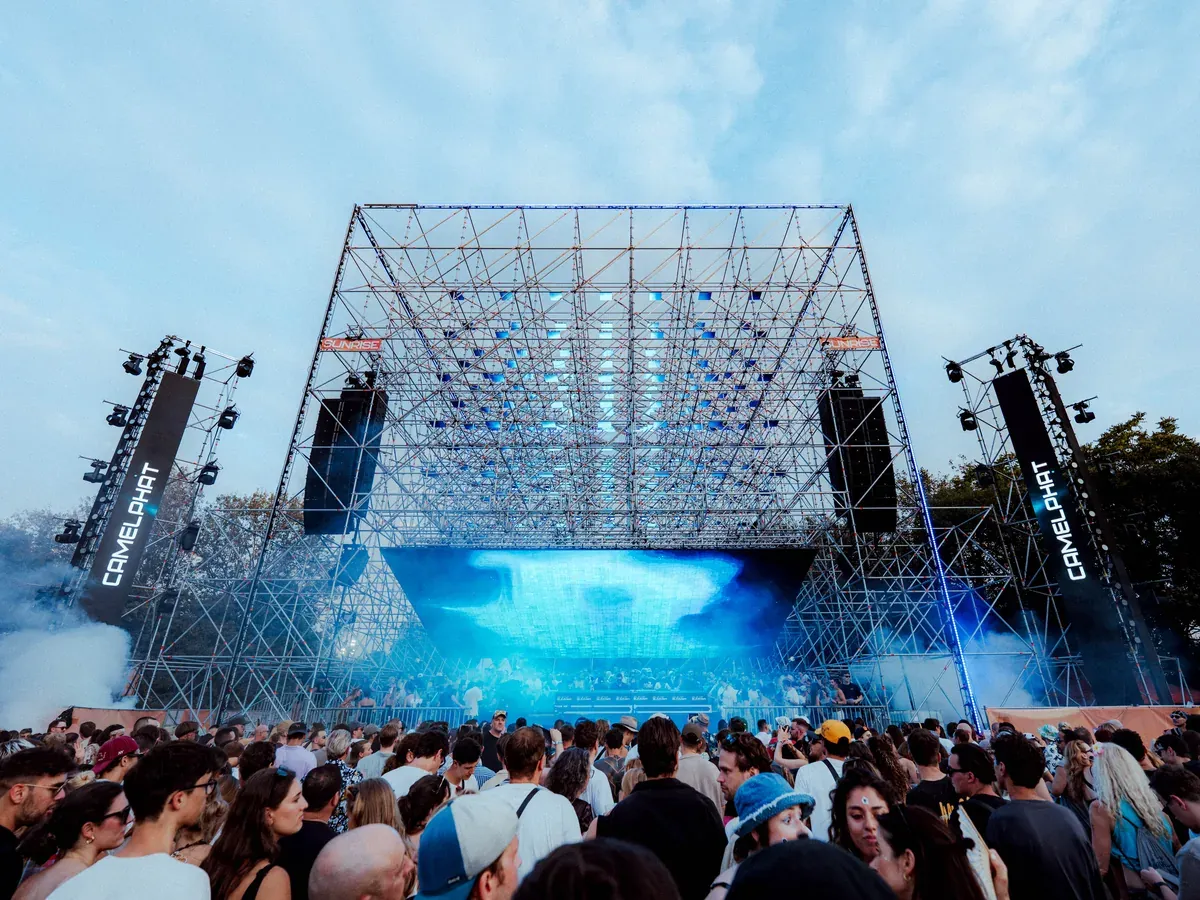
The stage was built as a Layher lattice of cubic cells, an LED module set into each cell of its upper section — a 7 × 7 × 5 array forming a single three-dimensional media volume above the performers. By day the lattice reads as a monument; by night the structure dissolves and the volume takes over.
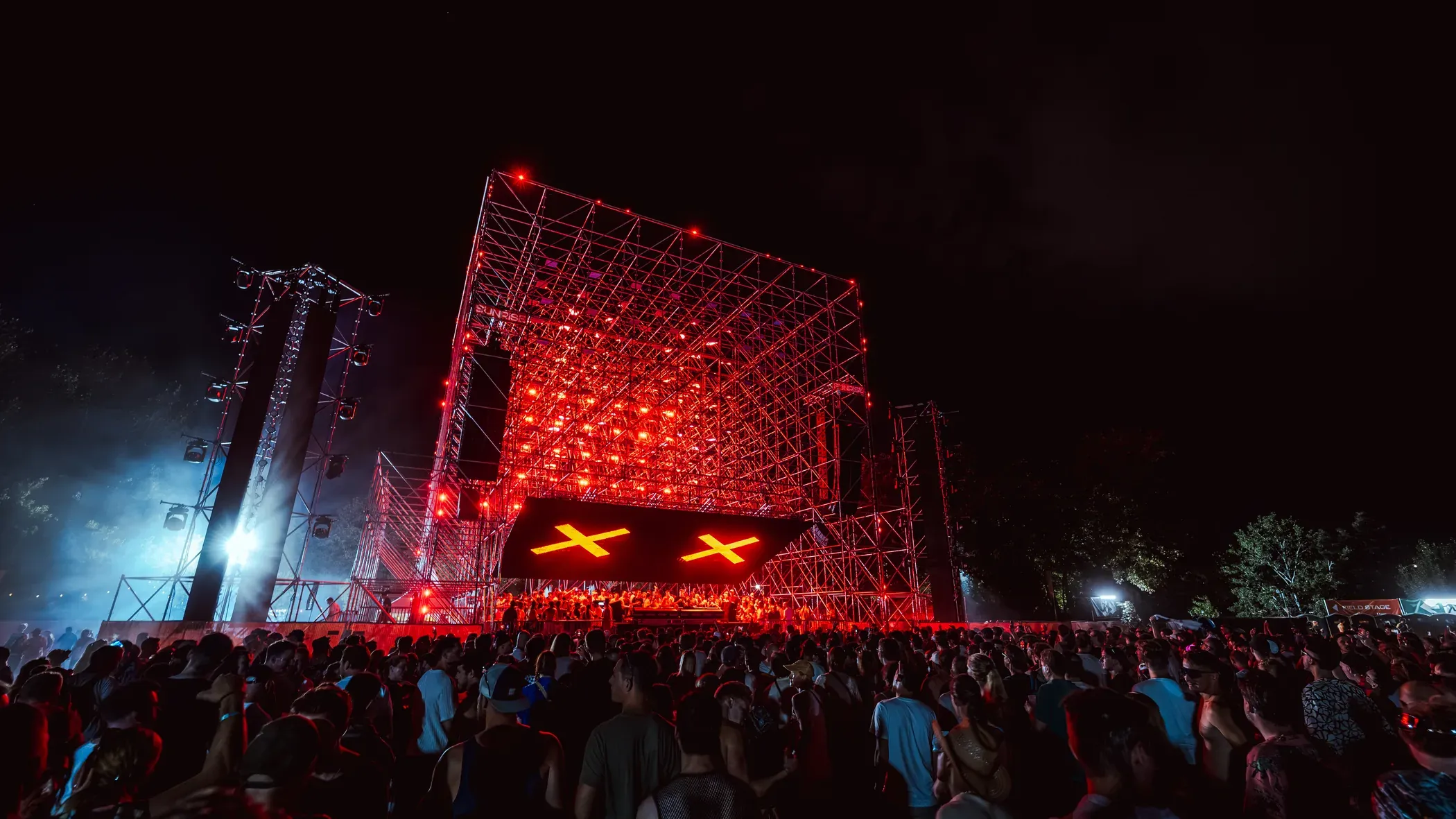
The volumetric matrix, the main screen above the backstage and the tower screens flanking the structure all run as one system, from one operator seat, on one engine. The construction was developed with the build contractor to meet the safety criteria without giving up the airiness the design depends on.
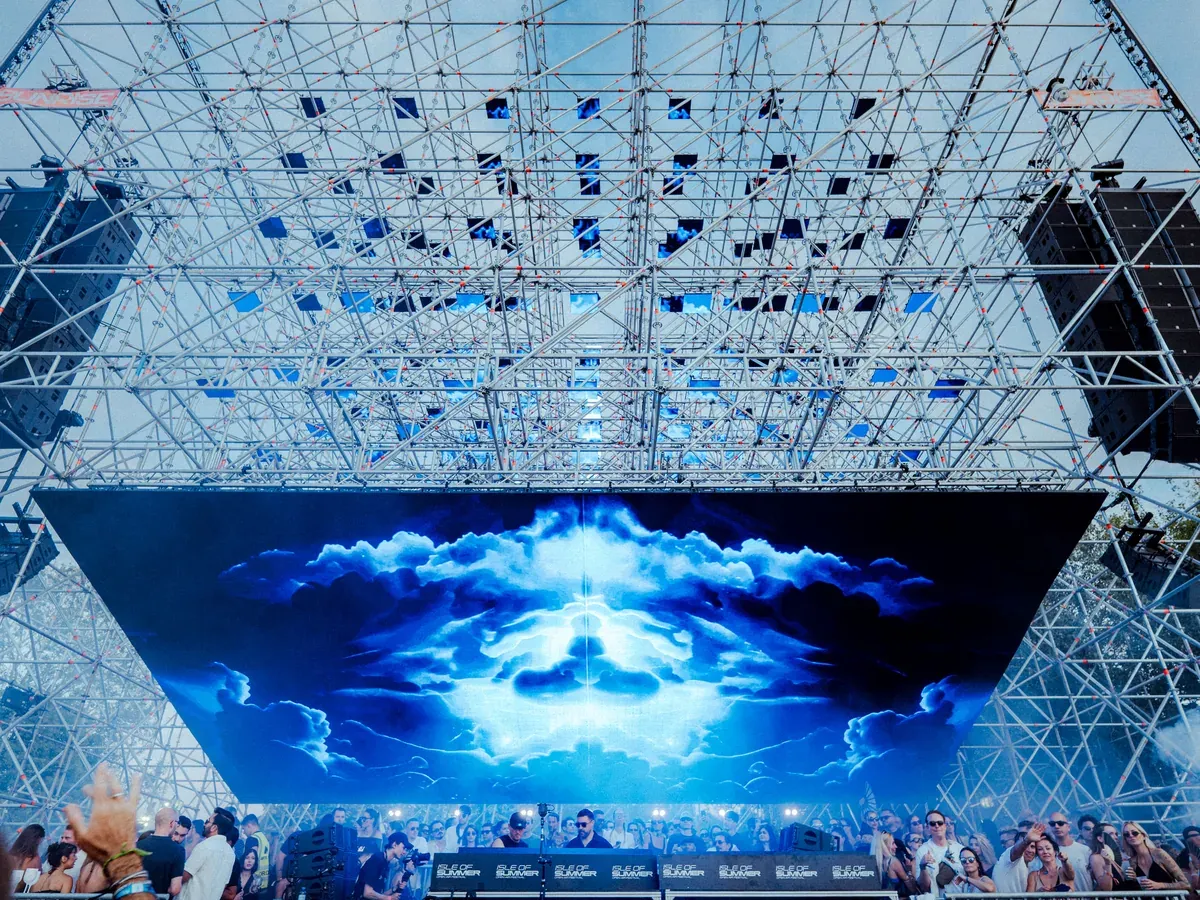
Sunrise Stage by day: Layher lattice structure reading as a monument, Isle of Summer Vienna 2026Sunrise Stage by day from below the 7 × 7 × 5 LED matrix, cloud content on the main screen, Isle of Summer Vienna 2026
© Fabian May
Stage architecture
A 20 × 20 m enclosed backstage sits inside the 32 × 20 × 20 m lattice. The same cells that give the structure its daytime silhouette carry the LED modules that dematerialize it after dark. Safety engineering was worked through with the build contractor from the first drawings.
Render — reality
The volumetric system
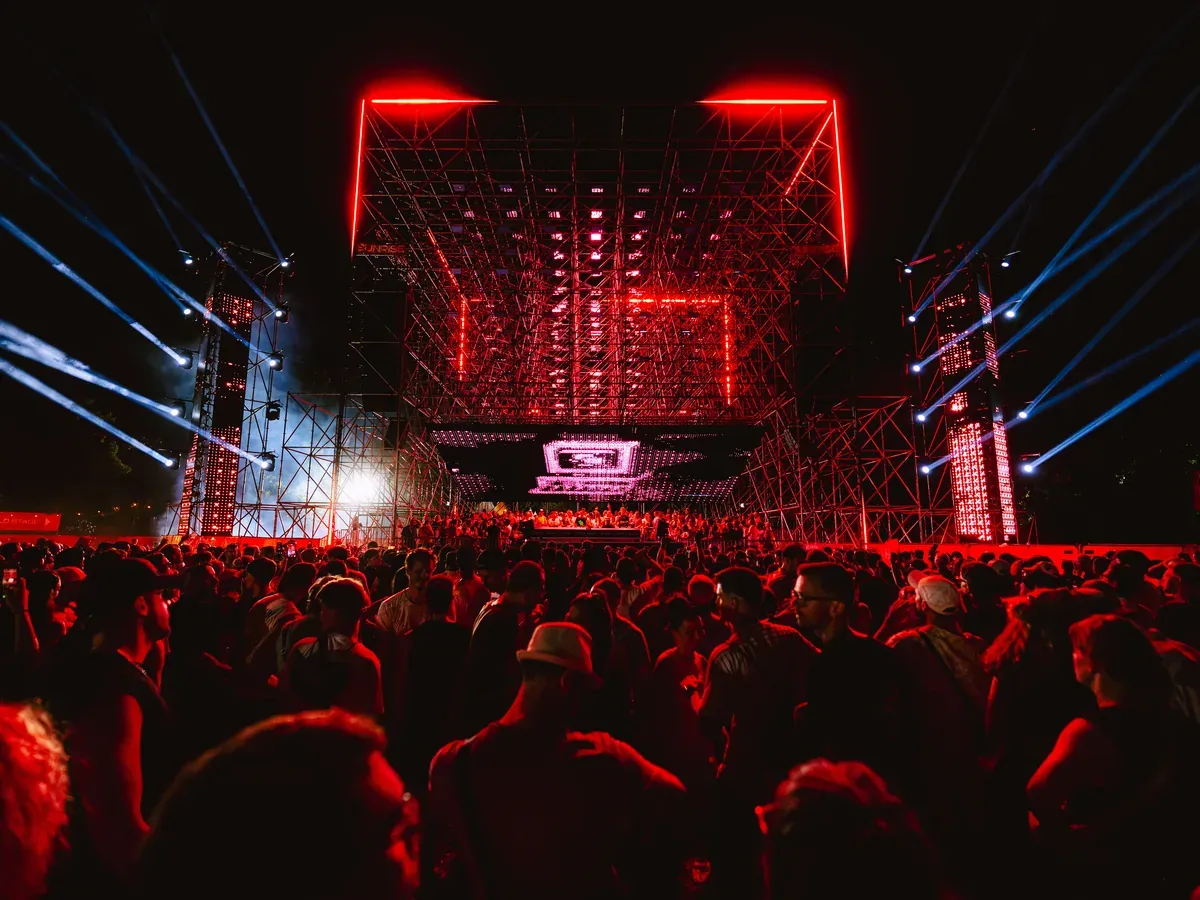
At the core is the 7 × 7 × 5 LED matrix — 245 cells forming a single volumetric media surface. Content for it is not mapped onto the volume; it is generated inside it. For this project the engine introduced Texture 3D generation, so visual processes run natively in three dimensions within the cube.
The volumetric matrix at night
© Sebastian Stahrl
The engine
One system ran the whole stage.
MØRPH, ØJE's own generative engine — eight years of continuous development behind it, rebuilt inside the studio into its current architecture: engine separated from UI, adaptive interface, performance tuned for live operation. It simultaneously drove the volumetric cube, the main screen and the tower screens while transmitting DMX to grandMA3 for the strobes and LED tubes framing the structure.
The architecture is modular by design. New components load straight from disk: anything dropped into a designated directory is detected and integrated into both engine and UI automatically, so the system grows with new generators and tools without touching its core.
The stack combines 2D and 3D content generation, processing, FX and parameter control. Any surface can receive the same generation or run its own with independent processing; external feeds enter through capture input, routable to any display; and an incoming video stream can be converted into a volumetric data set by buffering sequential frames and sampling them along a spatial axis.
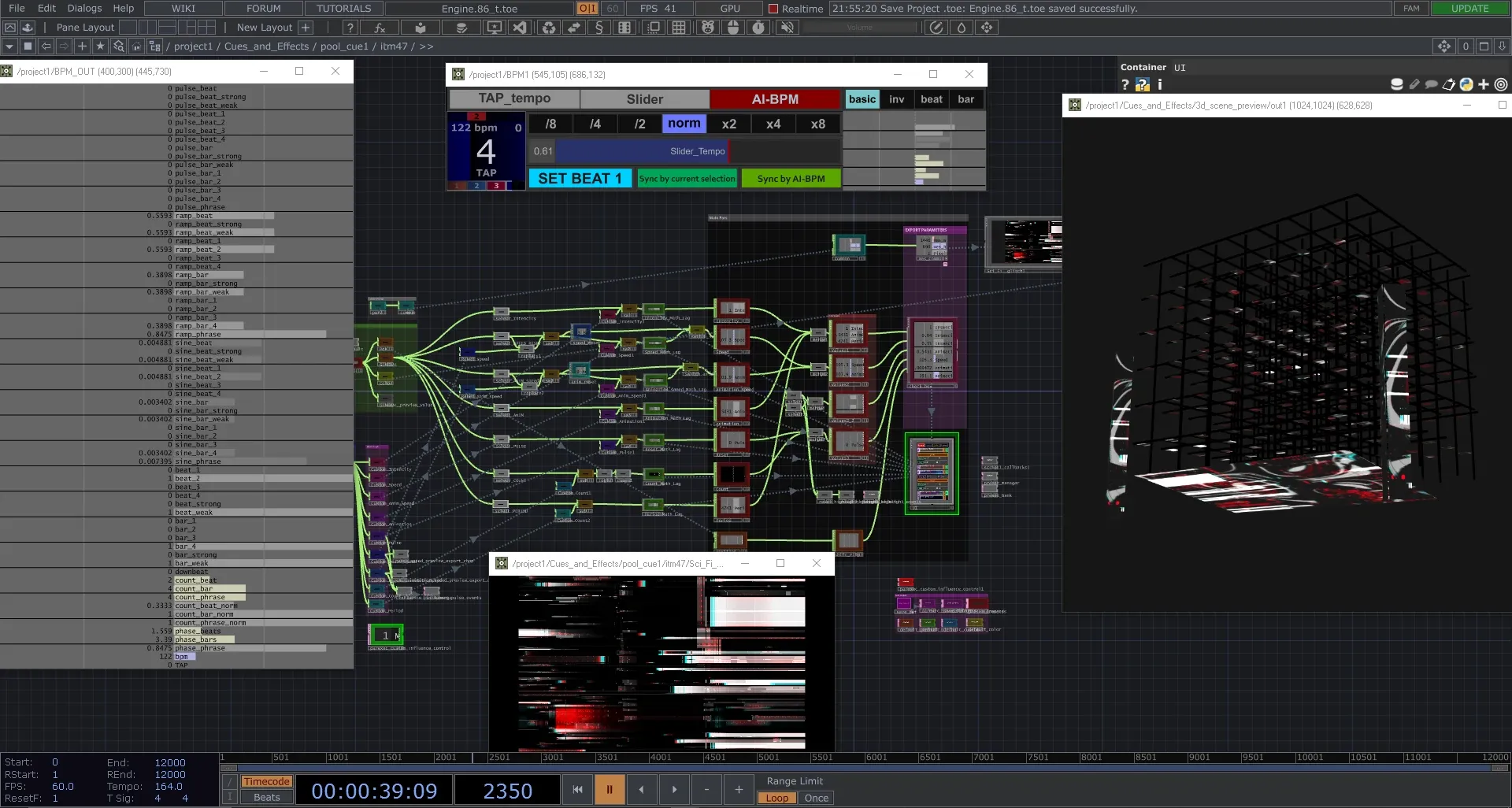
A beat-tracking module analyzes incoming audio and generates parameters mappable to any variable in the engine, with manual tempo input for live control. The same parameter space reaches the lighting rig: color values and behavioral parameters generated by the visual system went to grandMA3 over DMX for the tubes and strobes. The visual engine conducted the light.
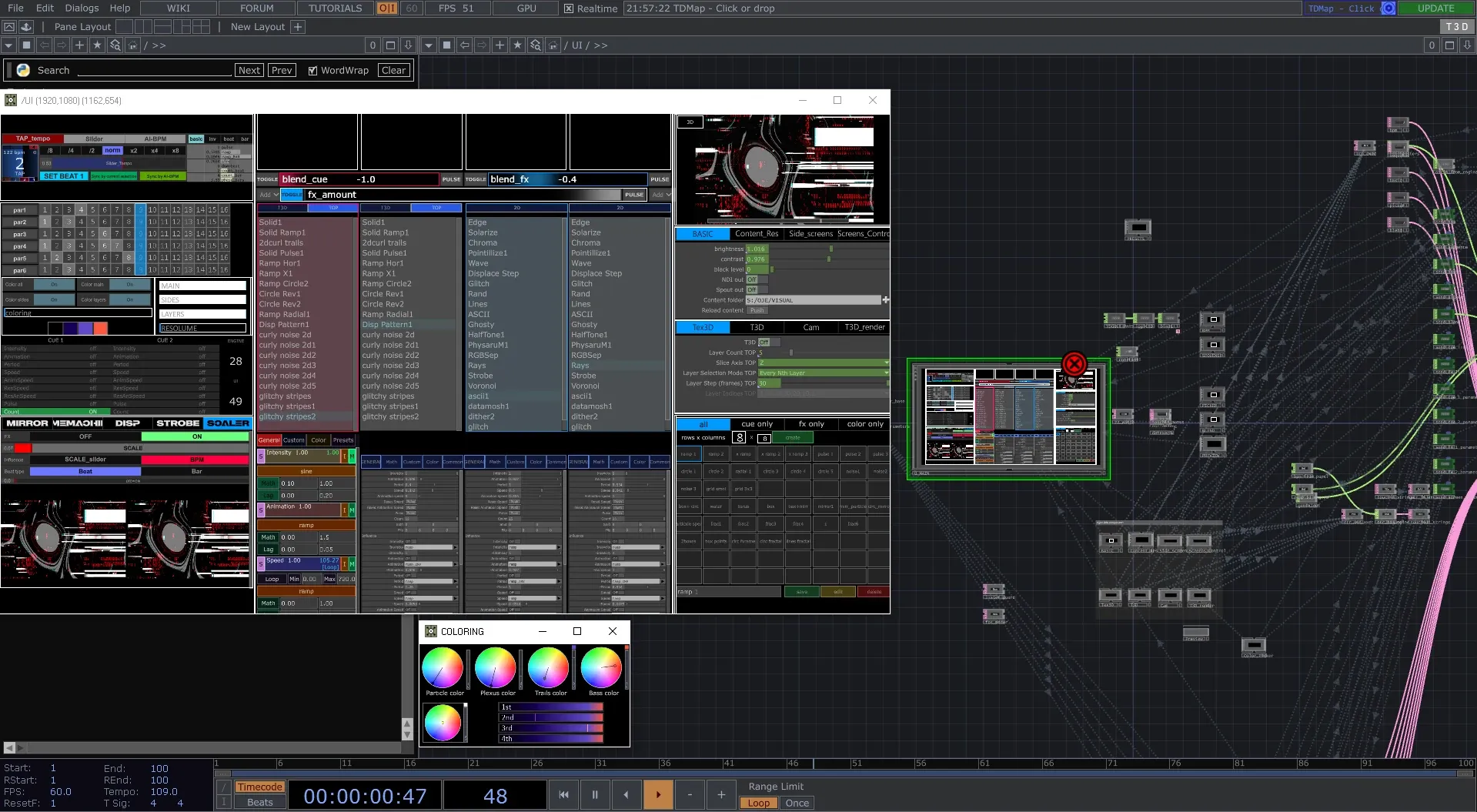
MØRPH engine network in TouchDesigner: beat-tracking module and 3D preview of the volumetric matrixMØRPH operator interface: generator and FX banks, Texture 3D layer controls and coloring
MØRPH — operator interface and signal network
Show operation
For the festival the system served as the primary content engine for all surfaces and as a VJ instrument for live control of the stage environment. Touring headliners' visual setups — Eric Prydz and Hugel — were connected and synced through the ØJE server the evening before the show, their feeds routed into the system via capture input. The handover is part of the engine itself: transitions between any guest VJ's setup and the stage's own program run inside TouchDesigner — no cut, no black, one canvas.
Everything ran with a backup path and instant switchover; a failure or a handover never reaches the canvas. The lighting rig ran under ØJE's own lighting designer on grandMA3, locked to the same visual logic the engine was driving.
The signal doctrine matched the studio's standard: 8K pixel-perfect output from the server, native connection to the LED processors, no converters or scalers in the path, everything locked to 60 Hz. A dedicated Resolume lane handled backup alongside the real-time engine.
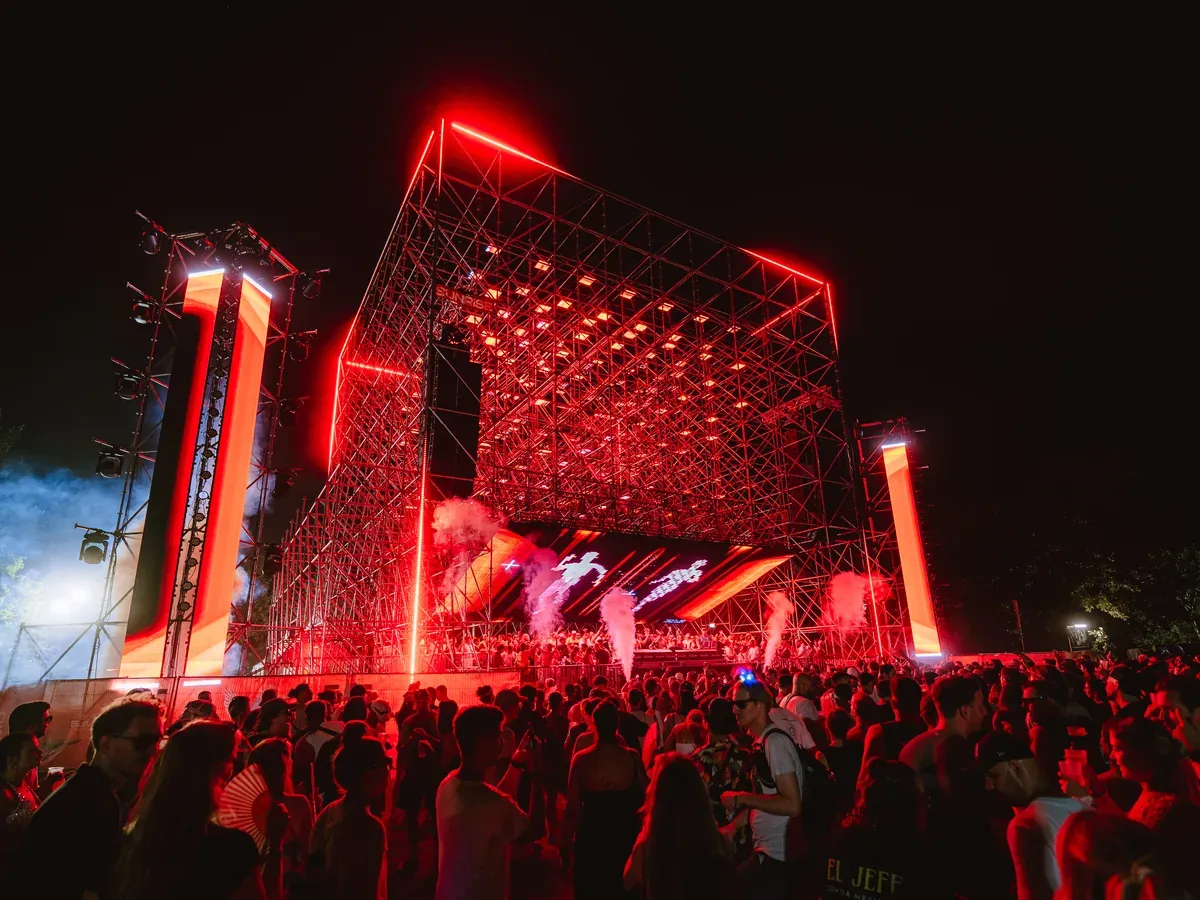
All four surfaces running from one engine at night: volumetric matrix, main screen and tower screens, Isle of Summer Vienna 2026Main screen content under the lit volumetric matrix at night, Sunrise Stage, Isle of Summer Vienna 2026
© Fabian May
Lineup
The booth during the show
© Fabian May
The build
ØJE supervision ran across every vendor on site from day one of the build — structure, LED, rigging, power — with the studio's technical supervisor embedded in the process rather than arriving for handover. 4 build days on site.
The stage had to 05
Hold a 20 × 20 m footprint with a working backstage inside
Stand as a monument through the daylight hours
Dissolve into a light volume after dark
Drive four surfaces from one engine and one seat
Host touring headliners' visual setups without re-rigging
Technical setup 08
7 × 7 × 5 volumetric LED matrix — 245 cells, one 3D media surface
821 Absen A5 LED panels across matrix, main screen and towers
260+ lighting fixtures: 144 Astera Titan Tubes, 40 AX5 TriplePARs, 20 Robe GigaPointes, 21 Roxx Cluster B2, 35 SGM P-6, 160 meters of AX2 PixelBars
MØRPH — ØJE's own generative engine: Texture 3D, hot-loadable modules, beat-tracking audio analysis
Engine-driven lighting: DMX parameters to grandMA3 for tubes and strobes
8K pixel-perfect output, no scalers
External VJ input via capture; video-to-volume conversion
Depence previz
Result
Three states — backstage machine, daylight monument, night volume — and one structure answered for all three.
Isle of Summer Vienna, the festival's first Austrian edition, ran its full day on Donauinsel — 30,000 tickets sold, doors at 11:00. The matrix held from doors to close: no visible fault, no dropped surface, no black frame through the headliner handovers.
Tools
01
TouchDesigner
02
MØRPH — ØJE generative engine
03
Resolume
04
grandMA3
05
Capture · Depence
06
ØJE media server — custom hardware
Credits
Permanent Entertainment — festival & production. ØJE Studio — stage concept, volumetric system, generative engine and show operation.

Case study by ØJE Studio · Published

ØJE Studio
General producer — Artem Kharchenko
Set & stage design — Maksim Spasibko, Artem Kharchenko
Generative system & engine (MØRPH) — Konstantin Dovzhik, Aleksei Parkhomenko, Anton Koloda, Eduard Krasilnikov
Producers — Artem Akimov, Slava Kostyakhin
Show operation / VJ — Fedor Zubkov, Aleksei Parkhomenko
Lighting programming — Daniil Moskovich
Photography & video
Photography — Fabian May, Sebastian Stahrl
Video — Pascal Benkendorf, Lubomir Pidany
Guest artist VJs
Hugel — Oriol Torres
Eric Prydz — Álvaro González
See also
01 2026 Array Installation 02 2025 Visionaries XR Production 03 2026 ØJE CUE MONITOR Tooling
Get in touch

“The form changes.
The discipline does not.”

We don't take every project. But when we commit, we stay until the system holds.